
The final months of the year are an important time for commercial property managers, facility managers, developers, and HOA boards to evaluate landscape performance and identify improvements that should be completed before the next operating cycle begins.
In Central Texas, year-end planning is not simply about cleaning up after the growing season. It is an opportunity to address visible problem areas, improve safety, correct irrigation issues, strengthen high-traffic spaces, and prepare the landscape for the months ahead.
The most effective commercial landscape upgrades are the ones that improve both appearance and long-term performance. By focusing on high-impact projects before year-end, property teams can reduce deferred maintenance, protect property value, and enter the new year with a stronger landscape plan in place.
Start With High-Visibility Areas
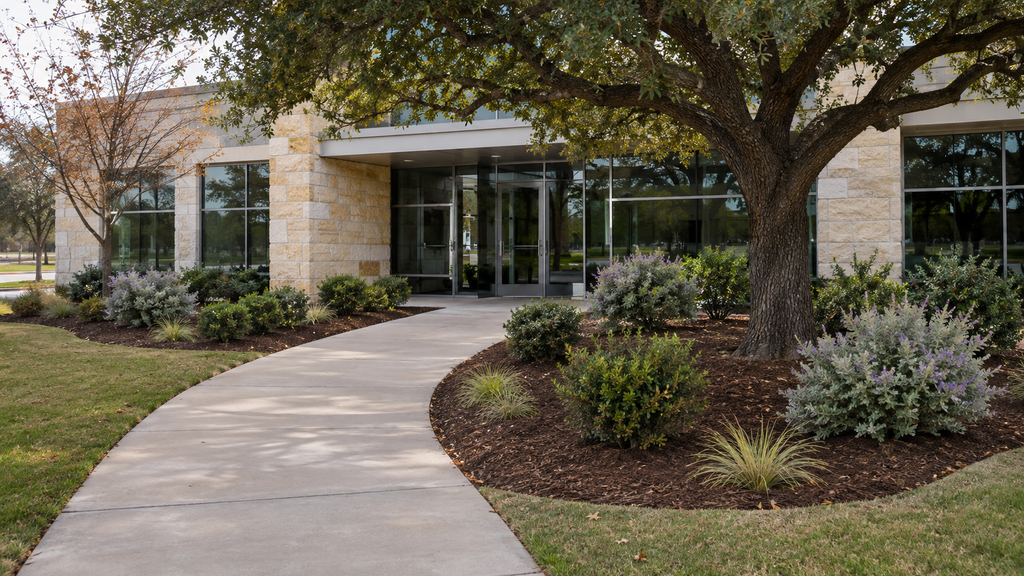
Not every part of a property carries the same visual weight. Entrances, monument signs, leasing offices, building approaches, parking lot islands, and common areas are often the first places tenants, residents, customers, and visitors notice.
These high-visibility areas should be a priority when evaluating Q4 landscaping projects.
Declining plant material, overgrown shrubs, bare beds, inconsistent edging, and poorly maintained signage areas can make an otherwise well-managed property appear neglected. Addressing these locations first allows property teams to make improvements where they will have the greatest visual impact.
In many cases, targeted enhancements can produce meaningful results without requiring a full landscape redesign.
Replace Declining or Underperforming Plant Material
Plants that repeatedly struggle can become a long-term maintenance issue.
Age, poor placement, irrigation problems, weather stress, soil conditions, and changing site conditions can all contribute to decline. When plant material is no longer performing well, continuing to maintain it may create unnecessary labor without improving the overall appearance of the property.
Year-end planning provides an opportunity to identify which plants should be restored and which should be replaced.
New plant material should be selected based on long-term site performance, including sunlight, mature size, irrigation needs, traffic patterns, and surrounding architecture.
Strategic plant replacement improves consistency and helps reduce recurring problems in future maintenance cycles.
Correct Irrigation Issues Before the Next Growing Season
A healthy commercial landscape depends on a reliable irrigation system.
By the end of the year, irrigation issues may have developed that are not immediately visible. Broken sprinkler heads, coverage gaps, controller problems, damaged lines, and overspray can all affect plant health and water efficiency.
These issues can also create operational concerns. Water on sidewalks, parking areas, entrances, or building surfaces can contribute to maintenance problems and unnecessary safety risks.
Including irrigation system review in a year-end property improvement checklist helps identify concerns before the next major growing season begins.
Correcting irrigation deficiencies now can protect existing landscape investments and support more consistent performance across the property.
Refresh Landscape Beds and Borders
Landscape beds have a significant impact on the overall appearance of a commercial property or HOA community.
Over time, bed edges lose definition, mulch shifts or deteriorates, plants become overcrowded, and bare areas begin to appear. Even when routine maintenance is being performed, these issues can make a property look less polished.
Year-end bed improvements may include redefining edges, removing declining material, pruning overcrowded plants, refreshing mulch, and correcting areas that no longer fit the intended design.
For HOA communities, entryways and common areas are especially important. Consistent bed presentation helps reinforce community standards and creates a more professional appearance throughout shared spaces.
Manage Overgrown Trees and Shrubs
Trees and shrubs can quickly interfere with the function of a property when growth is not managed strategically.
Overgrown vegetation may block signage, lighting, windows, sidewalks, parking spaces, or important sightlines. In some cases, branches can interfere with pedestrian access or create visibility concerns near drive lanes and intersections.
Corrective pruning should be part of year-end planning when these issues are present.
The goal is not simply to reduce plant size. Proper commercial pruning should support plant health while maintaining clearance, visibility, and appearance.
Well-managed vegetation contributes to a cleaner landscape and helps the property function more safely and efficiently.
Address Drainage and Erosion Problems
Drainage issues often become more noticeable during periods of heavier rainfall, making year-end review an important part of long-term landscape planning.
Standing water, washed-out mulch, exposed roots, soil erosion, and sediment buildup can affect both plant material and surrounding hardscapes.
If left unaddressed, these conditions may contribute to more significant property maintenance problems over time.
Property managers should evaluate areas where water consistently collects, crosses walkways, erodes planting beds, or creates unhealthy conditions for turf and plants.
Some issues may be corrected through grading adjustments or landscape modifications, while more complex problems may require a broader site evaluation.
The important step is identifying recurring concerns before they become larger liabilities.
Improve Entrances and Signage Areas
Property entrances and monument signs provide some of the strongest opportunities for visible landscape improvement.
These spaces create a first impression and are viewed repeatedly by tenants, residents, customers, vendors, and visitors.
Enhancements may include replacing declining plants, improving bed definition, correcting irrigation coverage, pruning existing vegetation, or updating outdated planting areas.
For developers and HOA boards, these improvements should be planned with long-term maintenance in mind.
A successful entrance landscape should look professional while also remaining practical to maintain. The best results come from balancing appearance, durability, irrigation performance, and plant selection.
Prioritize Landscape-Related Safety
A professional commercial landscape should support both appearance and safe property operations.
Year-end inspections should include a review of conditions that could interfere with pedestrian movement, visibility, lighting, or access.
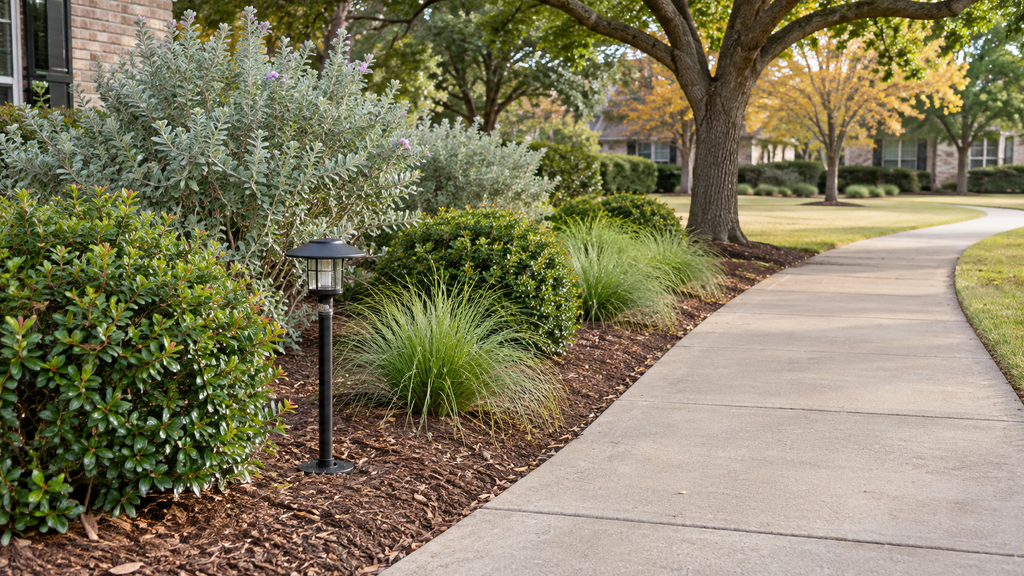
Vegetation blocking sightlines, branches extending into walkways, shrubs covering lighting, and irrigation overspray on paved surfaces should all be addressed promptly.
These issues are especially important for shopping centers, office properties, industrial sites, multifamily communities, and HOA-managed neighborhoods where daily traffic is constant.
Safety-driven landscape maintenance protects more than appearance. It supports the overall function of the property and demonstrates responsible management.
Build Next Year’s Landscape Priorities Now
One of the most valuable year-end improvements is creating a clear plan for the year ahead.
Rather than addressing problems only when they become urgent, property teams can use the fourth quarter to organize landscape needs by priority.
This may include irrigation repairs, plant replacement, drainage corrections, entrance enhancements, maintenance improvements, and larger landscape installation projects.
Establishing priorities early helps property managers and HOA boards separate routine maintenance from projects that may require additional planning or budgeting.
It also improves coordination with landscape contractors and allows projects to be scheduled around seasonal conditions and property operations.
Why Central Texas Properties Choose Texas Landscape Creations
With more than 20 years of experience serving commercial properties and managed communities, Texas Landscape Creations understands the importance of reliable year-end planning.
As an Aggie-owned and operated company, we focus on:
- Commercial landscape maintenance built around long-term property standards
- Irrigation system maintenance that supports landscape health and efficiency
- Landscape enhancements that improve appearance and functionality
- Safety-conscious service for commercial and HOA environments
- Reliable communication and dependable execution
We work with property managers, facility managers, developers, and HOA boards throughout Central Texas to build landscape programs that support appearance, safety, consistency, and long-term value.
Let’s Finish the Year With a Stronger Landscape
Year-end is the right time to address visible concerns, complete priority improvements, and prepare your property for the year ahead.
Texas Landscape Creations can help identify high-impact commercial landscape upgrades and develop a plan that aligns with your property’s needs, maintenance standards, and long-term goals.
Call us today at (979) 776-8873 to discuss year-end landscape improvements.
Or contact us online to get started.