
Establishing healthy, consistent turf across a commercial property or HOA community is an important part of overall landscape performance. Whether a property is installing new turf, repairing damaged areas, or renovating an existing lawn, the seeding method can have a major impact on establishment, maintenance, and long-term results.
In Central Texas, where heat, soil conditions, rainfall patterns, and irrigation demands can all affect turf success, choosing between hydroseeding and traditional seeding requires more than comparing upfront costs. Property size, slope, erosion risk, timeline, and long-term expectations all play a role in determining the best approach.
Why Turf Establishment Method Matters
A successful turf installation is about more than getting grass to grow quickly. The goal is to create consistent coverage, strong root development, and a lawn that can handle ongoing use and seasonal stress.
Poor establishment can lead to thin areas, erosion, inconsistent growth, and repeated repairs. For commercial properties and HOA communities, those issues can affect curb appeal, increase maintenance demands, and make the landscape look uneven.
Choosing the right method from the beginning helps create a stronger foundation and can reduce the need for corrective work later.
What Is Hydroseeding?
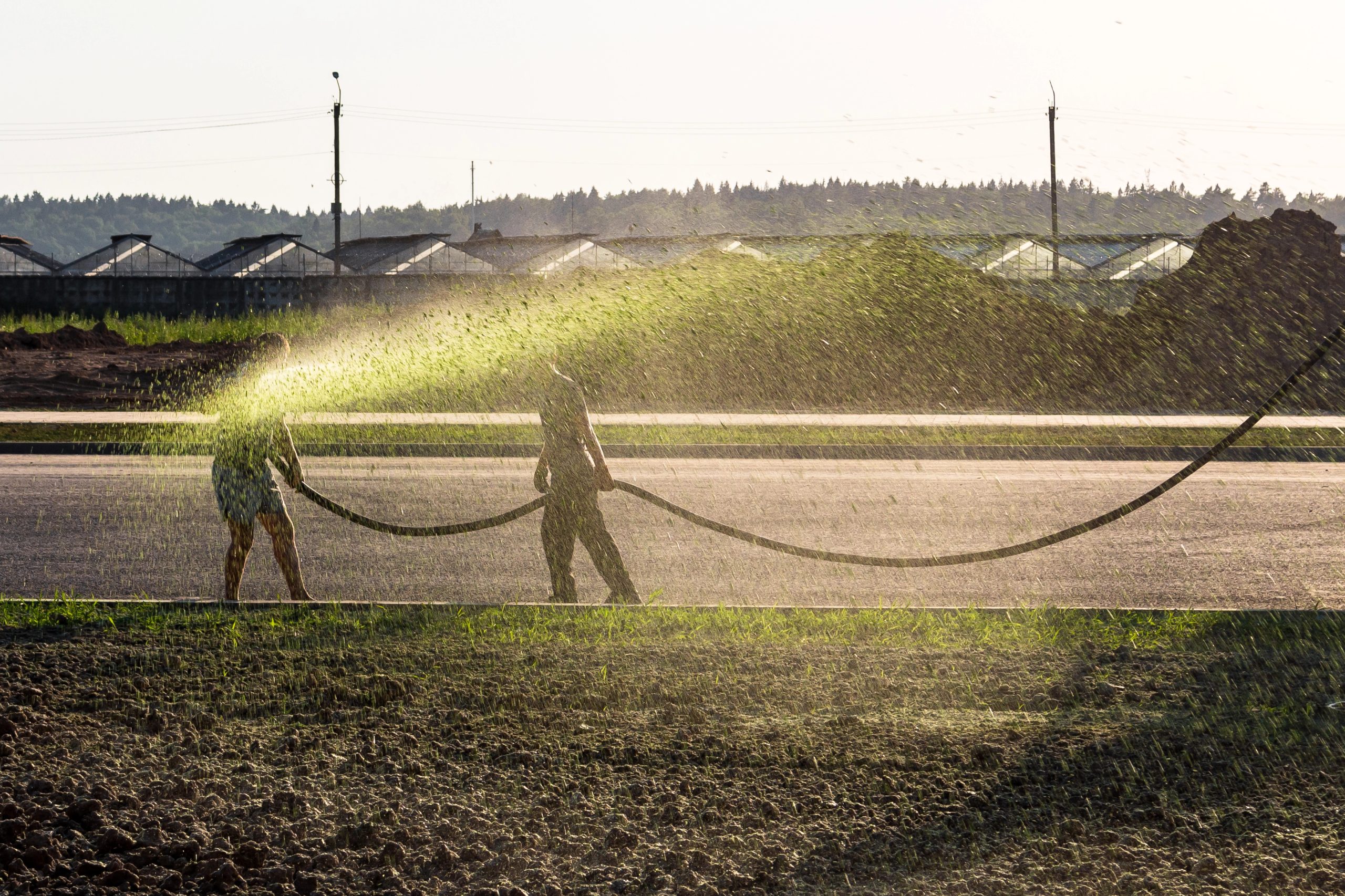
Hydroseeding uses a mixture of seed, mulch, fertilizer, and water that is sprayed evenly across prepared soil.
The mulch helps hold moisture around the seed while also protecting the surface from drying too quickly. Because the mixture is applied across the entire area at once, hydroseeding can provide uniform coverage over large spaces.
This method is often well suited for:
- Large open commercial areas
- HOA greenbelts and common spaces
- Sloped terrain
- Areas with erosion concerns
- Projects where consistent coverage is a priority
For larger properties, hydroseeding can also improve installation efficiency by covering more ground in less time than traditional hand or mechanical seeding methods.
What Is Traditional Seeding?
Traditional seeding involves applying grass seed directly to prepared soil, typically followed by raking, rolling, or a light covering to improve seed-to-soil contact.
This approach can be effective for smaller or more targeted turf projects where precision is important.
Traditional seeding is often used for:
- Smaller renovation areas
- Spot repairs
- Localized turf replacement
- Areas where seed placement needs to be tightly controlled
The method is straightforward, but success depends heavily on soil preparation, moisture management, and follow-up maintenance.
How Hydroseeding Performs in Central Texas
Hydroseeding offers several advantages for Central Texas properties, particularly when installation involves large areas or difficult terrain.
The mulch layer helps protect seed and retain moisture during early establishment. This can be especially valuable during warmer periods when exposed soil can dry quickly.
Hydroseeding can also provide more even seed distribution across large areas, reducing the risk of heavy growth in one section and thin coverage in another.
On slopes or erosion-prone sites, the added surface protection may help stabilize the soil while turf begins to establish.
However, hydroseeding still requires proper irrigation and site preparation. It is not a substitute for consistent watering, appropriate grading, or suitable soil conditions.
How Traditional Seeding Performs in Central Texas
Traditional seeding can also perform well when the project is smaller and conditions are carefully managed.
For spot repairs or targeted HOA lawn renovation, traditional seeding may provide more control and may be easier to incorporate into an existing landscape.
The main challenge is keeping the seed evenly moist during germination. In Central Texas, warm temperatures and variable rainfall can make this more difficult, particularly on exposed sites.
Without consistent irrigation, seed may dry out before it has time to establish. Wind, runoff, or heavy rain can also move seed out of place.
For smaller areas with reliable irrigation and good soil preparation, traditional seeding remains a practical option.
Consider Project Size and Site Conditions
Project scale is one of the most important factors in choosing between the two methods.
Hydroseeding is often more practical for large commercial lawn installation projects because it can cover broad areas efficiently and provide more consistent application.
Traditional seeding may make more sense for smaller areas, repairs, or phased renovations where hydroseeding equipment would be unnecessary.
Site conditions should also be considered. Slopes, drainage patterns, soil quality, shade, foot traffic, and erosion risk can all influence which method will perform better.
The best choice is the one that fits the property, not simply the method that is most familiar.
Compare Cost With Long-Term Value
Upfront cost is important, but it should not be the only consideration.
Hydroseeding may involve a higher initial investment than traditional seeding, especially on smaller projects. However, on larger sites, the efficiency of application and more uniform coverage may reduce labor demands and the need for repeated corrective work.
Traditional seeding may be more economical for smaller areas, but it can require more monitoring, reapplication, or repair if establishment is uneven.
For property managers and HOA boards, the better question is often not which method costs less initially, but which method is more likely to deliver consistent results for the specific site.
Irrigation Is Critical With Either Method
Regardless of the seeding method, irrigation plays a major role in establishment.
New seed needs consistent moisture during germination and early root development. Too little water can prevent establishment, while excessive watering can cause seed movement, erosion, or disease concerns.
Before either hydroseeding or traditional seeding begins, irrigation coverage should be evaluated.
Sprinkler heads, zones, controller settings, and coverage patterns should be checked to make sure the newly seeded area can be watered consistently.
For commercial properties and HOA communities, this step is essential. Installing turf without confirming irrigation performance can create avoidable problems from the start.
Soil Preparation Can Determine Success
Seeding is only one part of the process.
Compacted soil, poor grading, drainage issues, or excessive debris can prevent turf from establishing properly regardless of the method used.
Before installation, the site should be evaluated and prepared to support good seed-to-soil contact and healthy root development.
That may include grading, loosening compacted soil, correcting drainage problems, or adding appropriate soil amendments.
A strong installation begins below the surface. Proper preparation often has as much impact on long-term turf performance as the seeding method itself.
Choose the Method Based on the Property
There is no single seeding method that is right for every commercial property or HOA community.
Hydroseeding is often a strong choice for large areas, slopes, and projects where uniform coverage and efficient installation are priorities. Traditional seeding can be effective for smaller renovations, repairs, and areas where precise placement is more important.
The right decision should account for project size, site conditions, irrigation, soil preparation, erosion risk, timing, and long-term maintenance expectations.
Texas Landscape Creations evaluates these factors before recommending an approach. The goal is to choose the method that gives the property the best opportunity for consistent, durable turf establishment.
Build Turf With Long-Term Performance in Mind
A successful turf project starts with planning.
Texas Landscape Creations brings more than 20 years of experience to commercial lawn installation and HOA lawn renovation projects throughout Central Texas. Our team considers site conditions, irrigation performance, project scale, and long-term maintenance before determining the best path forward.
Whether hydroseeding or traditional seeding is the better fit, the objective is the same: establish healthy, consistent turf that supports the appearance and performance standards of the property.
Call us today at (979) 776-8873 to discuss your turf installation or renovation project.
Or contact us online to get started.